
What does travel, the human nervous system and the Earth’s systems have in common?
New connections and conversations.
I was travelling last week and, although I do quite a bit of travel for work, it doesn’t often include time to relax and chat.
I find that when I relax, the topics I enjoy chatting about are quite different to when I’m in go‑go‑go mode — but one thing that never changes is how I see patterns.
Packaging is my second career, and the reason I chose to enter the industry is my love of health and healing!
“What?” I hear you say. “Packaging linked to health and healing…?”
Yes, I’d say. Packaging could and should be a vehicle for change. After all, it links our supply chains end to end, and packaging could be the thing that enables traceability and transparency, including circular recycling systems.
Packaging feels like its apart of modern life and, when designed well, it can help form good habits. (Read Atomic Habits to learn about habit stacking.)
Anyway, I’m going off on a tangent…
What I wanted to share today is a theory about patterns.
Could our human body and our mind be a mirror of the ecosystems of planet Earth?
I’m fascinated by soil health and how it supports ecosystems, and how, through the food we eat, it supports our own health too.
I recently read Regenesis by George Monbiot, and it reminded me that if it wasn’t for fungi, planet Earth would likely never have had soil. Fungi came first.
So how does all this waffle fit with human systems and planetary systems?
I see a mirror in our own nervous system and the hyphae and mycelium networks. Both enable messages to be sent and received — or, as we say up north, a right good chinwag.
Here’s where the theory holds ,and where it doesn’t.
1. Shared systems principles (the strongest parallel)
Interdependence
- Earth: Forests, oceans, the atmosphere, microbes and animals all depend on one another.
- Human body: Organs, hormones, immune cells, gut microbes and neural networks are mutually dependent. No part thrives in isolation. Damage one system long enough and others destabilise.
Homeostasis
- Earth: Climate regulation, carbon cycles, water cycles.
- Body: Temperature control, pH balance, blood sugar, nervous system regulation.
Both systems:
- Detect imbalance
- Compensate
- Collapse if stress exceeds adaptive capacity
Feedback loops
- Earth: Ice–albedo feedback, rainforest rainfall loops.
- Body–mind: Stress → cortisol → immune suppression → illness → more stress.
Positive feedback amplifies change; negative feedback stabilises.
2. Structural echoes (metaphorical but compelling)
| Earth | Human |
| Atmosphere | Respiratory system |
| Rivers | Blood vessels |
| Soil microbiome | Gut microbiome |
| Forests | Organs / tissues |
| Ozone layer | Skin / immune barriers |
| Tectonic activity | Neural & emotional processing |
Especially striking:
- The gut microbiome behaves like an internal ecosystem, not a single organ.
- The brain functions less like a command centre and more like a distributed network, similar to ecological webs.
3. Mind ↔ Biosphere parallels
Mental health & ecological health:
- Suppressed emotions ↔ polluted rivers
- Chronic stress ↔ climate instability
- Psychological resilience ↔ biodiversity
Both mental systems and ecosystems:
- Need diversity to be resilient
- Fail under monotony, extraction and constant pressure
- Heal slowly and non‑linearly
4. Scale fractals (systems within systems)
This idea appears in:
- Systems biology
- Gaia theory (Lovelock)
- Buddhist & Indigenous philosophies
- Modern complexity science
Patterns repeat across scales:
- Cells → organs → bodies
- Individuals → societies → biosphere
The rules stay similar even as the scale changes.
5. Why this analogy matters
Thinking this way changes how we behave:
- Health becomes about balance, not control
- Environmental harm feels personal, not abstract
- Healing shifts from “fixing parts” to restoring relationships
In short
The human body–mind is not a miniature Earth ,but both follow the same systemic logic.
They are expressions of the same organising principles, playing out at different scales.
I think it’s a bit odd that people often separate themselves from nature thinking we are a separate from it.
If we started thinking of ourselves as part of nature and therefore integral to natures systems would we be more respectful of our resources, and design with a different outcomes?
Would we be more inclined to utilise biomimicry as our go to design tool?
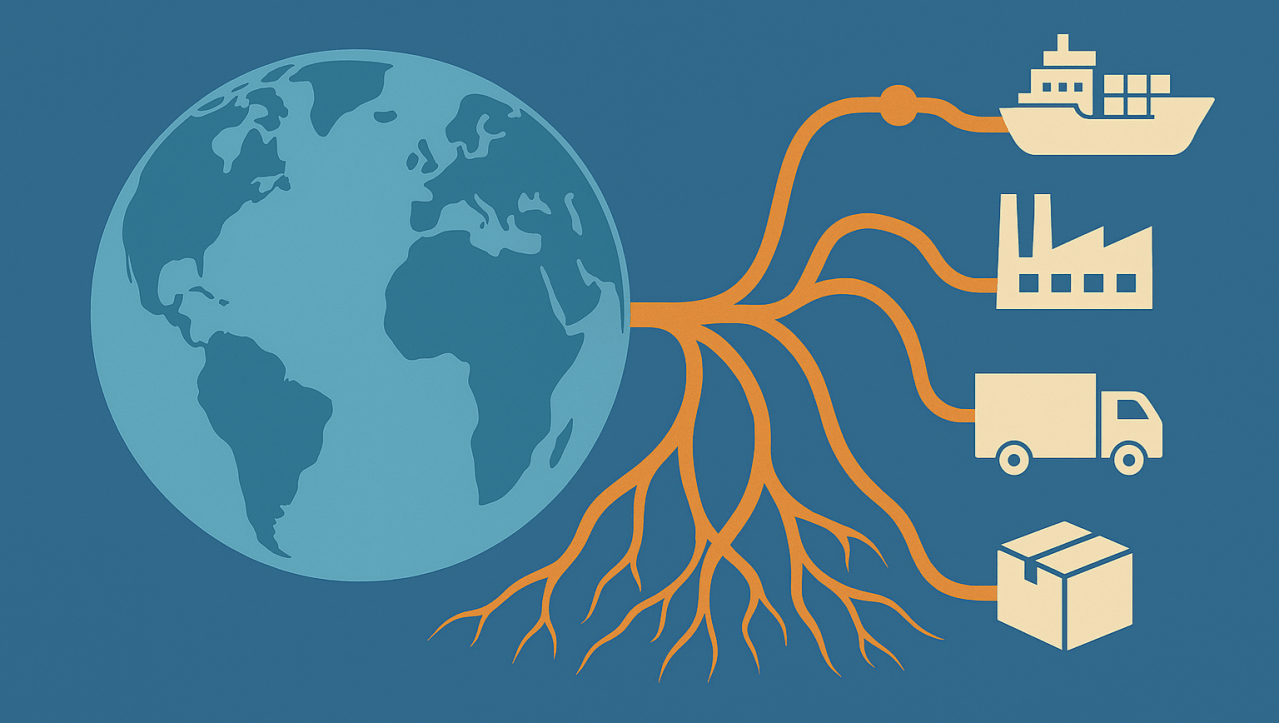
For example, If hyphae and mycelium can carry nutrients, warnings and wisdom across the Earth, then our packaging can carry transparent traceability across a supply chain. Let’s design systems that behave like living networks, traceable, transparent and circular.
Mushrooms aren’t just food; there are the lone dancer, the inspiration, the blue print.
 feet1st